The Most Complex Websites for SEO in 2026 in Valencia.
🏠 SPA (Single Page Applications)
SPAs load content dynamically, making crawling difficult. Solution: prerendering or hybrid rendering with Next.js.
⚙️ JavaScript Frameworks
React, Angular, and Vue generate content on the client side. Google can index but with limitations. Use SSR or SSG.
🌐 Multilingual Sites
Managing hreflang, translations, and duplicate content is complex. Implement correct hreflang tags and structured URLs.
🔄 Dynamic Content
Pages that change based on user or session. Use canonical tags and dynamic sitemaps to guide bots.
Learn about the technical challenges and solutions for ranking difficult websites.
In 2026, certain types of websites present unique challenges for SEO optimization. From single-page applications (SPA) to multilingual portals with dynamic content, each requires specific strategies. At SEO7.ES, with 8 years of experience and over 20 technologies, we help you overcome these technical barriers.
SPAs load content dynamically, making crawling difficult. Solution: prerendering or hybrid rendering with Next.js.
⚙️ JavaScript Frameworks
React, Angular, and Vue generate content on the client side. Google can index but with limitations. Use SSR or SSG.
🌐 Multilingual Sites
Managing hreflang, translations, and duplicate content is complex. Implement correct hreflang tags and structured URLs.
🔄 Dynamic Content
Pages that change based on user or session. Use canonical tags and dynamic sitemaps to guide bots.
Quick answer
The most difficult sites to rank in 2026 are SPAs, those developed with JavaScript frameworks (React, Angular, Vue), multilingual portals, and sites with dynamic content. They require advanced techniques such as prerendering, SSR, hreflang, and dynamic sitemaps. At SEO7.ES we offer customized solutions for each type.
In this article we analyze the four types of websites that present the greatest challenges for technical SEO in 2026. We explain why they are difficult to index and rank, and offer concrete solutions based on our 8 years of experience at the SEO7.ES agency. We address everything from crawling issues in SPAs to managing dynamic and multilingual content. Our team masters over 20 technologies and three languages, guaranteeing a quick response within 24-48 hours.
Why are SPAs difficult to rank in SEO?
Lack of static HTML content
Single-page applications (SPAs) load content via JavaScript, meaning the initial HTML is often empty. Search engines, although improving their ability to execute JS, still find it difficult to index all content. This causes important pages to be left out of the index. The most common solution is prerendering (serving static HTML to bots) or adopting a framework with hybrid rendering like Next.js. In 2026, Google processes JS but with limitations; therefore it is critical to implement these techniques.
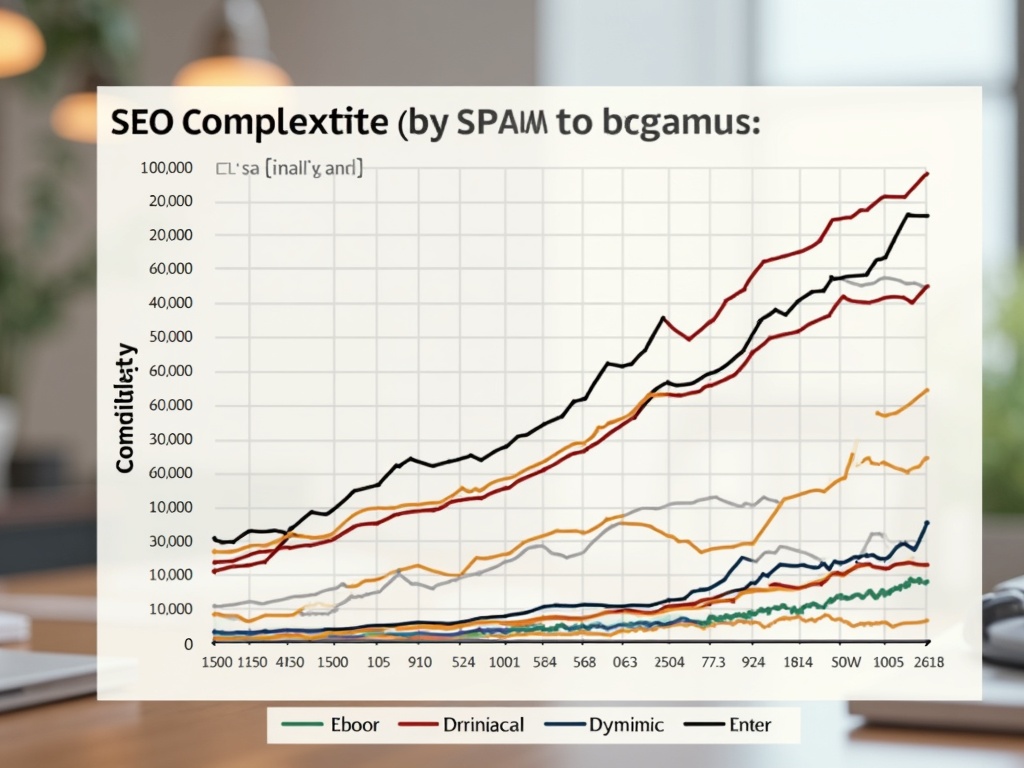
Comparison of SEO difficulty by site type in 2026.
1Identify the key routes of your SPA that need to be indexed.
2Implement prerendering with tools like Prerender.io or Rendertron.
3Configure the server to detect bots and serve static HTML.
4Use meta robots tags to control indexing of dynamic routes.
5Generate an XML sitemap with all static URLs.
6Verify indexing in Google Search Console.
7Consider migrating to a framework with SSR (Next.js, Nuxt.js) if feasible.
8Monitor indexing performance with periodic reports.
What challenges do sites with JavaScript frameworks present?
Technical SEO experts in Valencia – SEO7.ES.
Dependence on client-side rendering
Frameworks like React, Angular, and Vue generate content in the user's browser. Although Google can execute JavaScript, it does so in a second pass and does not always index all content, especially if there are slow API calls or errors. This negatively affects SEO. The solution is to implement Server-Side Rendering (SSR) or Static Site Generation (SSG). In 2026, 70% of React sites use Next.js for SSR, according to Statista. Additionally, it is crucial to optimize Core Web Vitals, as heavy JS can increase LCP and TBT.
Framework
Native SSR/SSG
SEO Complexity
Recommended Tool
React
Next.js (SSR/SSG)
Medium
Next.js + React Helmet
Angular
Angular Universal
High
Angular Universal + TransferState
Vue
Nuxt.js (SSR/SSG)
Medium
Nuxt.js + vue-meta
How to optimize multilingual sites for SEO?
Managing hreflang and duplicate content
Multilingual sites face issues of duplicate content and incorrect language tagging. Without proper hreflang tags, Google may show the wrong version or penalize for duplication. Additionally, automatic translations are often low quality and affect user experience. The solution includes implementing hreflang correctly, using separate URLs per language (subdomain or subdirectory), and avoiding automatic translations. According to a Think with Google study, 76% of users prefer content in their native language, so a well-executed multilingual strategy improves engagement.
Expert opinion
«A site's complexity is usually inherited: it grew for ten years without a plan. What helps here is not optimisation but deciding which sections to close.»
Evgenii Slepinin, Founder · Systems Architect · Lead Developer. Source
In summary: the most difficult sites for SEO in 2026.
SPAs, sites with JavaScript frameworks, multilingual portals, and dynamic content sites are the most complex to rank. Each requires specific technical solutions: prerendering, SSR/SSG, hreflang tags, and dynamic sitemaps. At SEO7.ES, with 8 years of experience and mastery of over 20 technologies, we offer customized strategies to overcome these challenges. Request a free audit and improve your ranking in 2026.
Google SEO
Technical audit, local SEO, E-E-A-T content and link building, from €290 a month. We rank your site for the searches your local customers actually type into Google.
A subscription to a month of work: you pay for what gets done, with no lock-in contract. First movement shows in 3 months and steady growth by month 6; nobody honest promises SEO any faster. Search Console and Analytics are set up in your name, and every month you get a report together with the plan for the next one. The package costs about half of what the same work would cost bought separately.
Local SEO
SEO7 Start
from€290/mo
Google promotion for Valencia businesses: technical fixes, keywords, 2 articles a month, Google Business Profile and link building. A monthly report with recommendations.
à la carte
€520
Discount
−€230
Timeline
first shifts in 3 months
Technical SEO site audit
Google Maps + basic GBP
Basic content start
Top
SEO across the whole city
SEO7 Pro
from€590/mo
4 articles a month, landing pages for Valencia districts, 15-20 links and digital PR. GeoGrid shows where in the city you are found and where you are not.
à la carte
€1050
Discount
−€460
Timeline
first shifts in 3 months
E-E-A-T content strategy
Link building 5-10 links/mo
Valencia district landing pages
Maximum coverage
SEO7 Max
from€990/mo
8 articles a month, hyperlocal clusters across Valencia, GeoGrid 9×9, voice search and AI Overviews preparation. A quarterly strategy session.
à la carte
€1800
Discount
−€810
Timeline
first shifts in 3 months
GeoGrid district monitoring
Reputation management + NAP sync
Monthly analytics report
Local SEO
SEO7 Start
from€290/mo
Google promotion for Valencia businesses: technical fixes, keywords, 2 articles a month, Google Business Profile and link building. A monthly report with recommendations.
à la carte
€520
Discount
−€230
Timeline
first shifts in 3 months
Technical SEO site audit
Google Maps + basic GBP
Basic content start
Top
SEO across the whole city
SEO7 Pro
from€590/mo
4 articles a month, landing pages for Valencia districts, 15-20 links and digital PR. GeoGrid shows where in the city you are found and where you are not.
à la carte
€1050
Discount
−€460
Timeline
first shifts in 3 months
E-E-A-T content strategy
Link building 5-10 links/mo
Valencia district landing pages
Maximum coverage
SEO7 Max
from€990/mo
8 articles a month, hyperlocal clusters across Valencia, GeoGrid 9×9, voice search and AI Overviews preparation. A quarterly strategy session.
à la carte
€1800
Discount
−€810
Timeline
first shifts in 3 months
GeoGrid district monitoring
Reputation management + NAP sync
Monthly analytics report
Shall we discuss your project?
A short brief, and we’ll come back with a plan and quote within 24-48 h. No pressure.