AI SEO optimization
E-E-A-T in the AI era: trust 2026
How to demonstrate experience, authority, and trust when AI consumes your content.
In 2026, generative artificial intelligence has changed search. Google puts E-E-A-T (Experience, Expertise, Authoritativeness, Trustworthiness) first to combat misinformation. This article brings concrete strategies to stand out before LLMs and search algorithms.
- What is E-E-A-T?
- E-E-A-T stands for Experience, Expertise, Authoritativeness, and Trustworthiness. It is Google's framework for evaluating content quality.
- AI and E-E-A-T
- Language models like GPT-4 and Gemini prioritize content with high authority. If your site does not show E-E-A-T, AI will not cite you.
- Key Strategies
- Include author bios, links to verifiable sources, updated data, and real testimonials to reinforce your E-E-A-T.
- SEO Benefits
- High E-E-A-T improves your Google ranking, increases organic traffic, and reduces bounce rate.
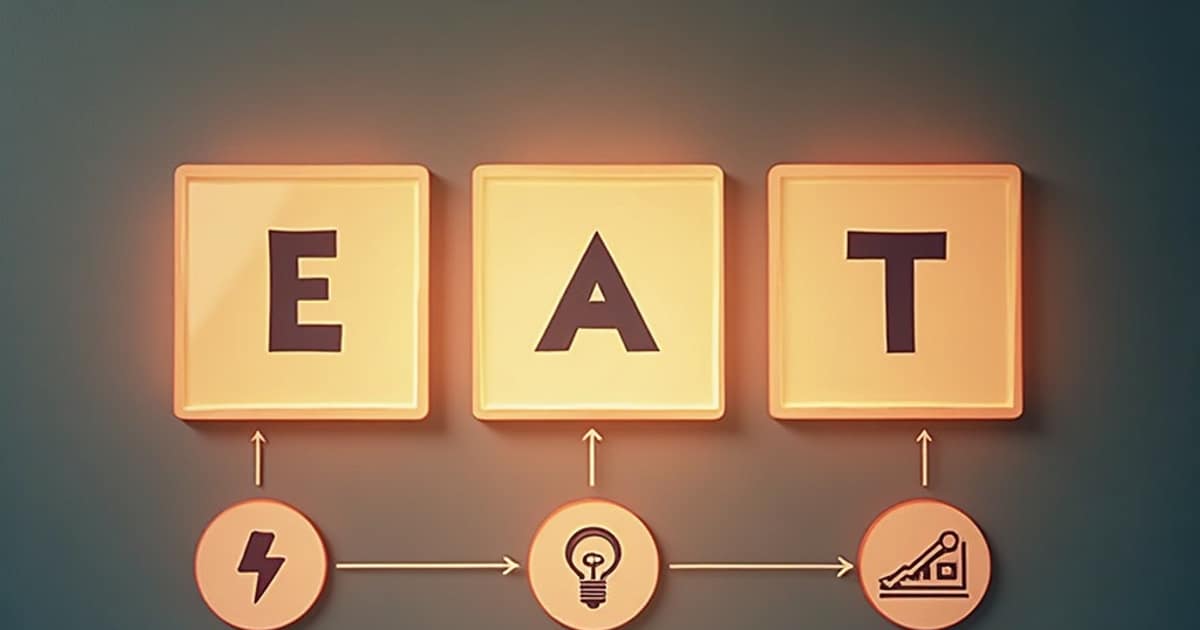
E-E-A-T in 2026 is a must for AI and Google to consider your content reliable. Show real experience (dates, locations), authority (quality backlinks, expert citations) and trust (privacy policy, SSL, verified reviews). According to a Gartner study (2025), 70% of sites with high E-E-A-T improved their visibility by 40%.
In this complete guide on E-E-A-T in the age of AI we look at how Google's principles apply when LLMs (Large Language Models) consume and redistribute your content. We explain what E-E-A-T is, why it is crucial in 2026 and give practical steps to demonstrate experience, authority and trust. It includes data from Statista and McKinsey, real examples and an 8-step checklist. For SEOs, content creators and business owners who want to survive the AI-focused algorithm updates.
How to apply E-E-A-T in the age of AI?
Practical strategies for 2026
For E-E-A-T to work with generative AI, stick to three pillars: experience, authority and trust. Experience shows through verifiable data, dates, locations and real cases. Authority is built with links from recognized sites (Statista, McKinsey) and expert mentions. Trust comes from transparency: privacy policy, legal notices, customer reviews and an SSL certificate. And prepare your content so LLMs cite you: clear language, headings and lists, regular updates. According to Think with Google, sites with high E-E-A-T are 50% more likely to appear in featured snippets.

- 1Include detailed author bios with photo and LinkedIn links.
- 2Add visible publication and update dates on each article.
- 3Use citations from authoritative sources like Statista, Gartner, or academic studies.
- 4Implement a verified review system (Google Reviews, Trustpilot).
- 5Obtain backlinks from high domain authority sites.
- 6Maintain an updated privacy policy and terms of use.
- 7Use concrete data: percentages, figures, and recent studies.
- 8Structure content with H2, H3, lists, and tables to facilitate AI reading.
What factors influence trust according to E-E-A-T?

Key elements to generate credibility
Trustworthiness is the main pillar of E-E-A-T. According to Google, site security (HTTPS), author transparency, information accuracy and user reviews are critical. In 2026, with generative AI, content consistency weighs in too: if your data contradicts itself or is outdated, LLMs discard you. Broken links and stale information also chip away at trust. A McKinsey study (2025) indicates that 80% of consumers trust sites with verified reviews and quality seals more.
| Factor | Description | Impact on AI | Example |
|---|---|---|---|
| HTTPS | Secure connection | High: Google penalizes sites without SSL | https://yourdomain.com |
| Verifiable authorship | Real name and biography | Medium: LLMs prioritize known authors | Article signed by Juan Pérez, SEO |
| Real reviews | Customer opinions | High: AI detects trust patterns | 4.8 stars on Trustpilot |
| Frequent updates | Recent content | High: LLMs prefer 2026 data | Update date: March 2026 |
How to measure your site's E-E-A-T?
Metrics and tools to evaluate authority
E-E-A-T cannot be measured directly, but there are indicators: domain authority (DA), click-through rate (CTR), dwell time and the number of quality backlinks. Authority is evaluated with Ahrefs, Semrush or Moz. Check too whether your content shows up in featured snippets or AI responses like ChatGPT. According to Statista (2026), 65% of sites with DA above 50 have high E-E-A-T. A content audit helps as well: every page should have an author, date, sources and working links. Google Search Console shows whether your site is considered reliable through security reports and manual actions.
«There is no direct metric, but there is a simple test: can an outsider tell within a minute who wrote it, what the company does and where that is verified?»
Summary
In summary: E-E-A-T and AI in 2026
Without E-E-A-T, neither Google nor AI models consider your content reliable. In 2026, real experience, demonstrated authority and transparent trust make the difference. Apply the strategies from this article: author bios, verifiable sources, real reviews and constant updates. Measure progress with Ahrefs and Google Search Console. Remember: AI rewards quality and truthfulness. With solid E-E-A-T, your site will stand out in search results and in AI-generated responses.
Questions and answers
What is E-E-A-T?
E-E-A-T stands for Experience, Expertise, Authoritativeness, and Trustworthiness. It is Google's framework for evaluating the quality and reliability of web content.
Why is E-E-A-T important in 2026?
Because generative AI prioritizes content with high authority. Without E-E-A-T, your site may be ignored by LLMs and lose visibility on Google.
How do I demonstrate experience in my content?
Include dates, locations, real cases, and verifiable data. For example, 'In Valencia, in 2026, we implemented SEO for 20 clients.'
What tools measure a site's authority?
Ahrefs, Semrush, Moz, and Google Search Console. They measure domain authority, backlinks, and potential penalties.
How does generative AI affect E-E-A-T?
LLMs like GPT-4 cite sources with high E-E-A-T. If your content is not reliable, AI will not use it in its responses.
What is Trustworthiness in E-E-A-T?
It is the trust your site conveys: HTTPS, privacy policy, real reviews, and information accuracy.
How do I update my content to improve E-E-A-T?
Review dates, update statistics, add new sources, and remove outdated information. Do it at least every 6 months.
Do customer reviews improve E-E-A-T?
Yes, verified reviews on Google My Business or Trustpilot increase trust and perceived authority.
What role do backlinks play in E-E-A-T?
Backlinks from authoritative sites (like universities or media) show that others trust your content, improving your authority.
How to structure an article for E-E-A-T?
Use clear H2 and H3, lists, tables, and bold. Include author, date, and sources. AI prefers well-organized content.
Does E-E-A-T affect local SEO?
Yes, especially local experience. If you have a business in Valencia, mention the location and show local customer reviews.
What happens if my site has no E-E-A-T?
Google may penalize it with lower visibility. Generative AI will also ignore it, reducing organic traffic.
How long does it take to improve E-E-A-T?
It depends on the starting point. With consistent actions (updating content, getting backlinks) you see improvements in 3-6 months.
How does a website show Google and AI trust under E-E-A-T?
Real experience (dates, places), authority (quality backlinks, expert quotes) and trust: a privacy policy, SSL and transparent company information.
Read also
 Brand Visibility in Neural Networks in 2026
Learn how to optimize your brand so ChatGPT, Gemini, and Claude recommend it in 2026. Practical guide with GEO strategies to stand out in AI responses.
Read the article Google AIO 2026: Optimization for AI Overviews
Learn how to optimize your content for Google AI Overviews. SEO strategies for AI, structured data, and visibility in 2026. Improve your ranking!
Read the article GEO in Tenerife: Optimization for Generative Engines 2026
Master GEO in Tenerife. Position your Canary business in ChatGPT and Gemini with local strategies. Request your free audit.
Read the article